Free users never become customers.
The trial ends before people reach useful value.
Product DNA + GTM DNA · The applied course
Find the friction between your product, pricing, customers and go-to-market plan. Get your team working from the same facts.
On-demand learning · Working templates · Your own product
Founders / Product leaders / Growth teams
The product decisions behind stalled activation, difficult sales and revenue that won’t expand.
Product DNA
+ GTM DNA
Building gets faster. Content gets faster.
The assumptions underneath them go unchecked.
The trial ends before people reach useful value.
Your target accounts need a product you haven’t built.
There’s no natural path to more seats, usage or modules.
Your sales motion costs more than the deal can support.
The message, channel and buying situation don’t line up.
Product, engineering and revenue have different versions of the plan.
AI makes it easier to execute the same mistakes faster.
AI can ship the feature, write the campaign and build the page. It can also scale a strategy nobody has checked.
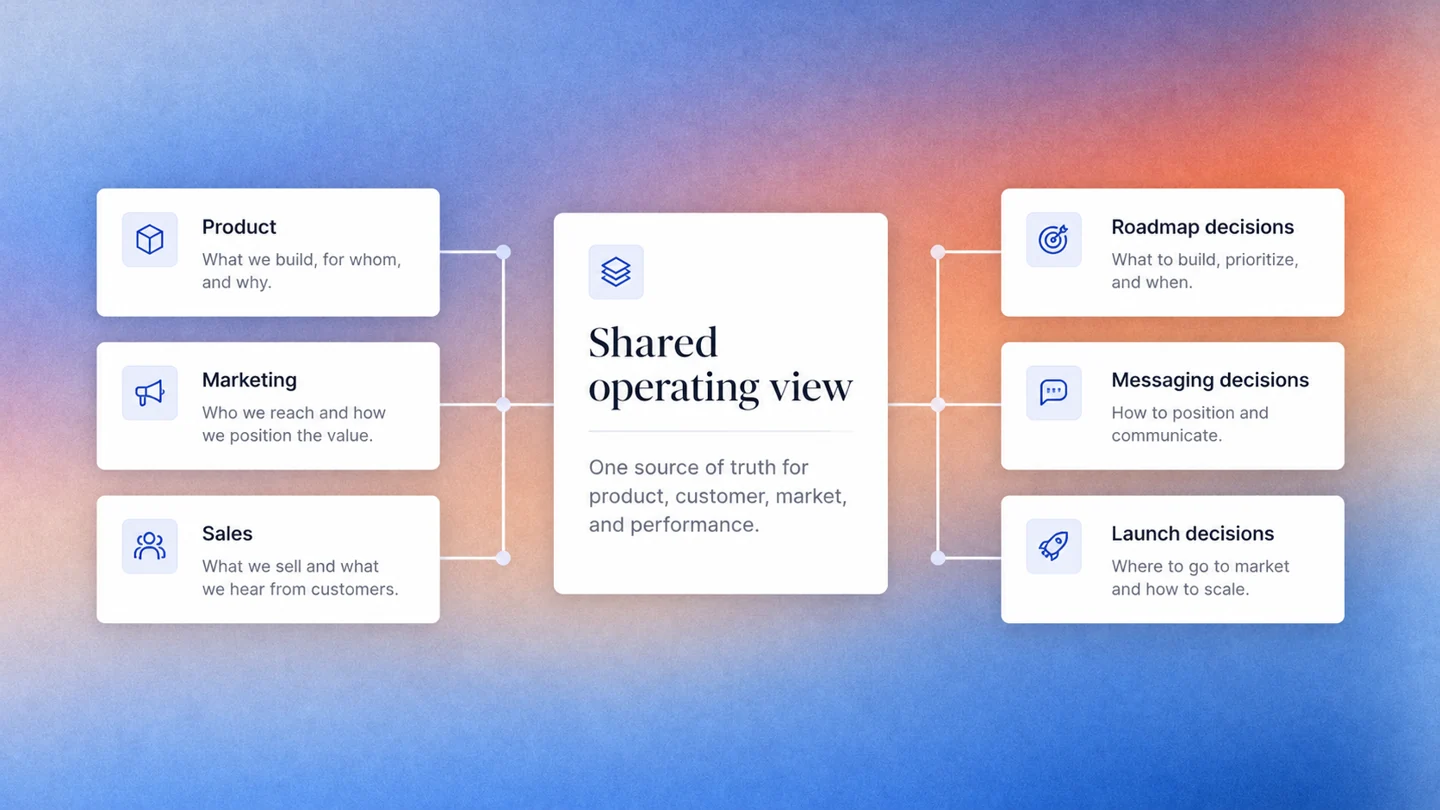
Agree on who the product serves, how customers get value and what has to happen for growth to work.
Give your team, and the AI tools they use, the same context for the next decision.
A familiar mismatch
The team wants self-serve sales. Every customer needs a migration, an administrator and three weeks of setup before the product helps.
Changing the signup page won’t remove that work.
Find the friction in your product →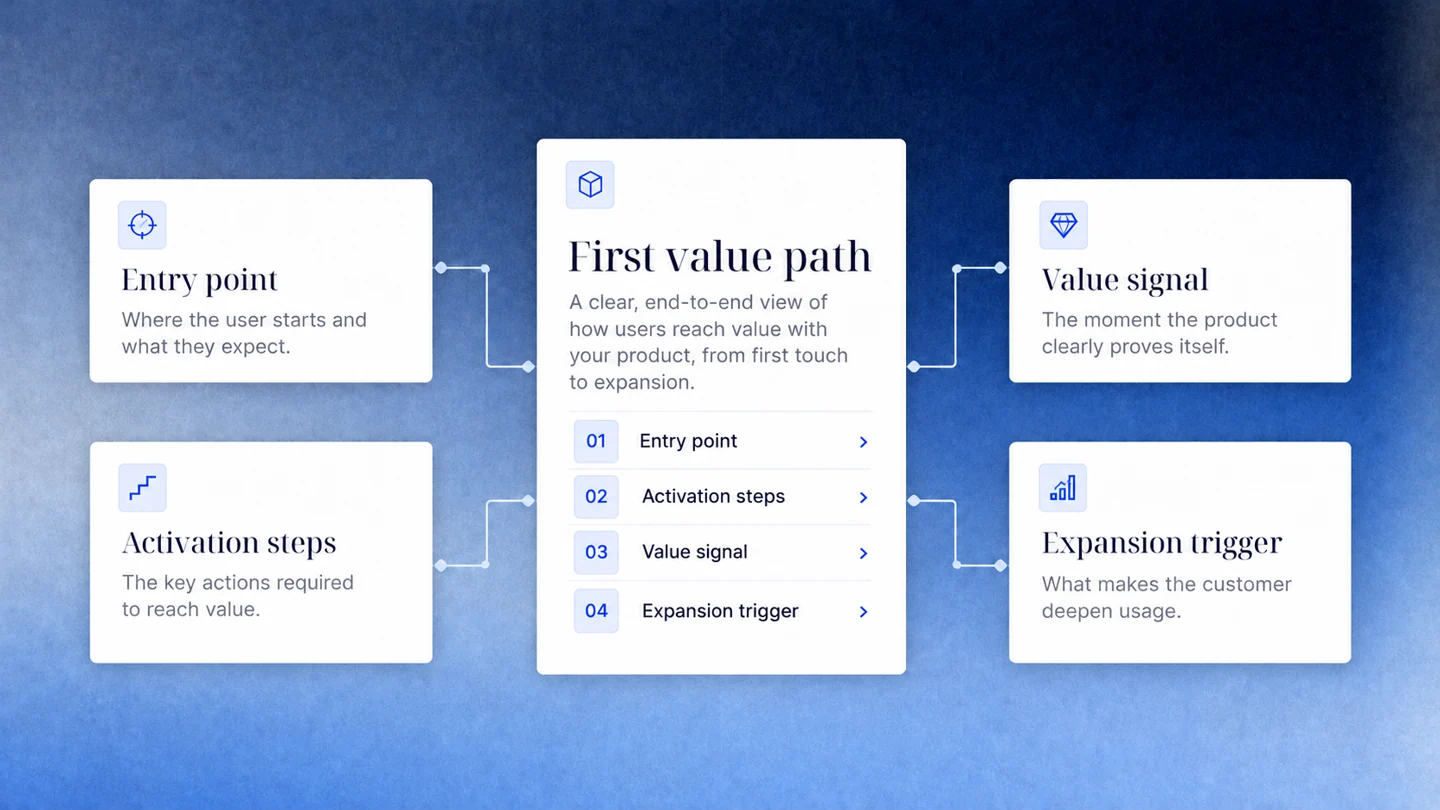
Understand what your product makes possible.
Then choose the market and motion that fit.
See how people get value, what they pay for, why they stay and how accounts can grow.
What is the price attached to?
Seats · Usage · Modules · Outcomes · Flat or hybridWhich roles depend on each other?
Individual · Admin and operator · Multi-team · ApprovalsHow do customers find and adopt you?
Self-serve · Sales-led · Partners · HybridWhen does the customer receive value?
Continuous · Periodic · Event-triggeredWho pays, uses, champions and approves?
Same person · Budget holder · Buying committeeWhat is the first real customer outcome?
First session · Import · Configuration · Team adoptionWhat makes staying increasingly valuable?
Switching costs · Network effects · Workflow · Data gravityWhat stands between signup and useful value?
Migration · Integration · Setup · Security · TimeWhat can grow inside an account?
Seats · Usage · Modules · Upgrades · NoneWhy would a particular buyer choose you?
Alternative · Difference · Switching friction · ProofChoose a reachable first market, define the right buyers and match your channels to the economics.
What kind of market are you entering?
Fragmentation · Sophistication · Regulation · Switching · Replacement · IncumbentsWhere can you win with today’s product?
Reachable · Focused · CompoundingWho has the problem and can adopt now?
Need · Budget · Deployment · Reachability · UrgencyHow can this product realistically grow?
Self-serve · Sales-led · Partners · HybridWhere can you reach buyers economically?
Search and content · Outbound · Partners · CommunitiesWhat selling work must happen first?
Evaluation · Assistance · Deal economics · First hireWhich alternative are you replacing?
Creation or resegmentation · Segment depth · ProofWhich growth assumptions need evidence?
Capital needs · Adoption · Retention · Market reachThe disagreements are the finding.
Get product, engineering and revenue to agree on the same facts.
See where your product and growth strategy pull apart, and what you can do about it.
A customer adds users and gets more value. Your flat fee stays the same.
Identify what can expand inside an account, then assess pricing and packaging that can grow with it.
A clearer path from customer success to revenue.
A useful feature gets attention. That alone doesn’t make your product part of the customer’s work.
Find what makes repeat use valuable, where team adoption matters and whether expansion is built into the product.
Prioritize the product changes that support lasting use.
A large market means little if your buyers can’t switch, can’t onboard or don’t feel the problem yet.
Choose a reachable segment. Connect its buying trigger to a useful promise and evidence it can trust.
Sharper targeting. A message grounded in buyer needs.
Your product is the working example.
The output is a plan you can act on.
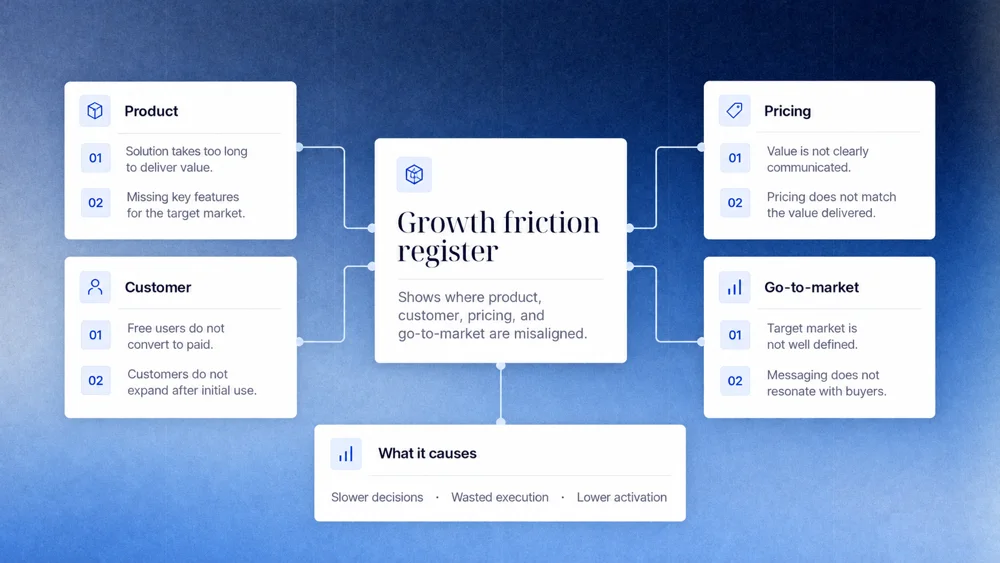
A shared description of how the product works commercially.
Who you can serve now, and where to go next.
A realistic route from discovery to adoption.
Contradictions worth fixing before you scale them.
What to change, what to test and who owns it.
The course
Six modules. Practical exercises.
A clearer way to decide what comes next.
Work through your own product, then use the findings to choose what deserves your team’s time.
Video and written lessons explain the structural choices behind common growth problems.
Use the profiles and exercises to separate what you know from what you still assume.
Bring the team together. Prioritize the friction, assign an owner and choose evidence that would change your mind.
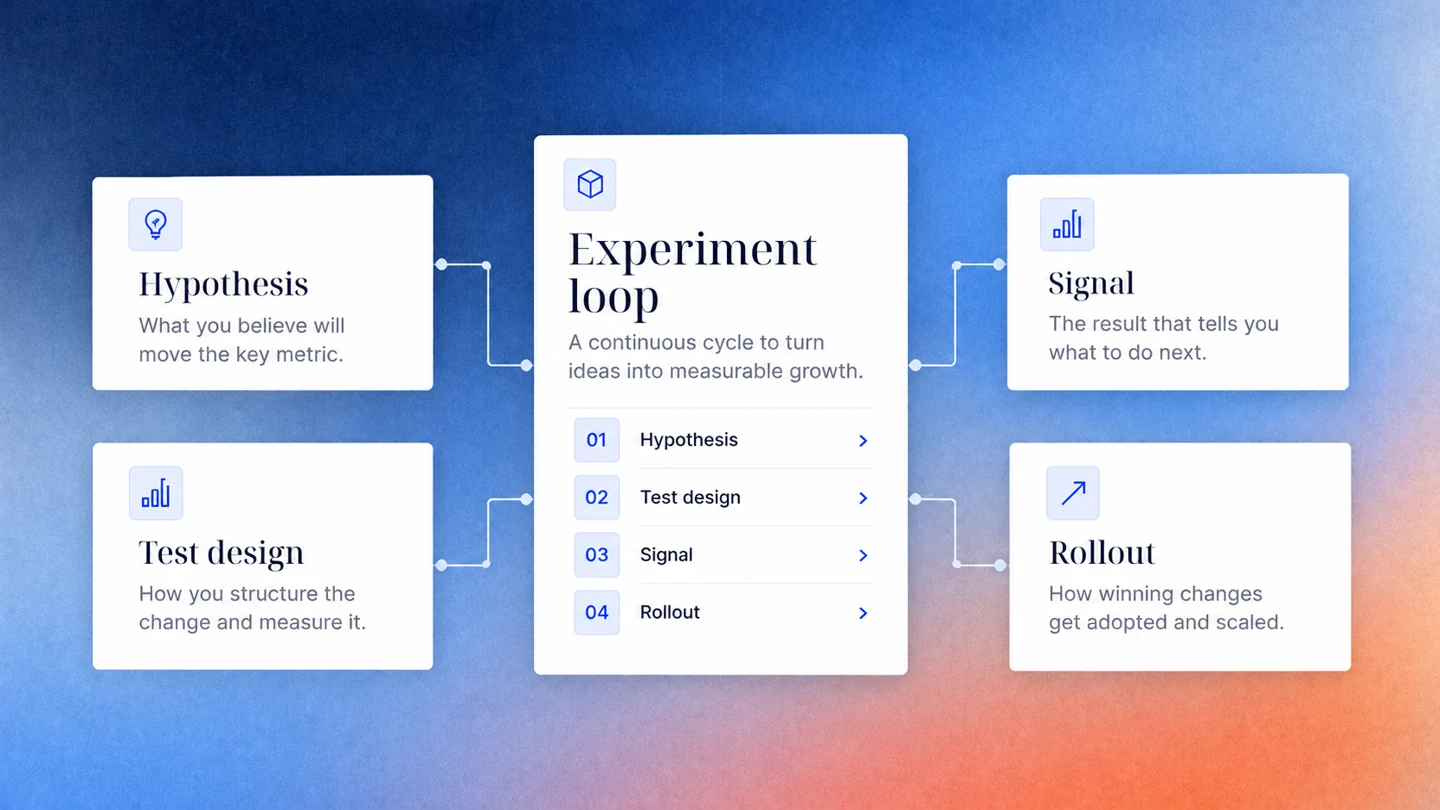
Turn “we should try this” into a specific hypothesis, a useful signal and a decision the result will inform.
Try the first exercise → Jake McMahon / ProductQuant
Meet your instructor
I work across product strategy, analytics, content and selling software. That range helps me spot the gaps between what a product does, how it’s explained and how it’s sold.
Sold into monday.com, Guardio, Circlesup, NewDayUSA, FormDr and Scale Insights.
Helped agencies close $16K–$38K deals and SaaS companies close $10K–$100K+ deals, including one relationship reaching $500K in customer lifetime value.
Written for thirdweb, Payoneer, monday.com, monday dev, CYE, Tasq, Spikerz and 8fig.
“I built and ran the content and sales system that helped grow Queue to $1.5M ARR.”
Founders. Product leaders. People responsible for growth at software companies.
Bring a real product and customer evidence. Work through the exercises yourself, then bring the team into the decisions.
Prefer to work through it live? Explore workshops →Product DNA + GTM DNA
Video and written lessons.
Working templates.
Your own product, worked through.
Get early-access updates and the free team diagnostic.
Just want the diagnostic? Use it now →Yes. The planned format combines video and written lessons with exercises you apply to your own product. Join the list for enrollment updates.
A real product and customer evidence make the diagnostic more useful. At idea stage, use it to name the assumptions you still need to test.
Yes, the exercises are designed to bring product, engineering and revenue together. Course-access and file-license options will be published when enrollment opens.
It helps you assess which motions fit your setup, value delivery, buyers and economics. The next step may be to change part of the product before changing the motion.
You can request a separate private workshop to work through the diagnostic together.
The price, access terms and enrollment date are not announced yet. Joining the list is free. You can use the diagnostic today without joining.